
“So many memories brought to mind.”

— Margo, South Surrey

Pender Islands Historical Timeline

Step back through the centuries and explore the rich history of Pender Island, from its earliest prehistoric roots to the vibrant community we know today. This interactive timeline lets you journey across key moments, uncover stories of the people and places that shaped the islands, and connect with the heritage that continues to inspire us. Use the filters to browse by year, explore distinct periods, or search by keyword to dive deeper into the events that matter most to you.
Select a period

Select a year

Enter Keyword

Use these filters to narrow down your entry results.

Showing: 326 - 338 of 338 entries
  1. 1795

    Vancouver Island Title

    Royal Navy Captain George Vancouver negotiates the so-called “possession“ of Vancouver Island from the Spanish to the British.

  2. 1792

    Vancouver Expedition

    Captain George Vancouver leads an expedition to chart the northwest Pacific Coast, establishing British presence in the area. He recommends calling the local islands the “Gulf Islands“, which include both today’s San Juan and Gulf Islands.

  3. 1791

    Spanish Expedition

    A Spanish expedition led by Francisco de Eliza names this island “Ysla de San Eusevio.” He sends Jose Maria Narvaez to explore what is now Haro Strait. His ship, the Santa Saturnina, visits “San Antonio“, later Bedwell Harbour, before sailing to today’s Saturna Island.

  4. 1770

    Smallpox Epidemic

    First known smallpox epidemic kills at least 30% of Pacific Northwest First Nations.

  5. 1592

    Juan de Fuca’s Strait

    Juan de Fuca, a Greek employee of Spanish interests, sails into the strait now named after him.

  6. 1579

    First European Contact?

    Sir Francis Drake may have entered the Strait of Georgia, marking the first face-to-face contact between Europeans and Northwest Coast Indigenous Peoples.

  7. 1513

    Spain Claims Pacific

    Vasco Nunez de Balboa claims the Pacific Coast of North America for Spain.

  8. 1492

    Columbus Visits America

    Christopher Columbus completes Spanish-sponsored voyage to North America, ushering in European exploration, colonization and exploitation of the Americas.

  9. 1,800 B.C.

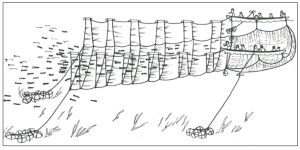
    Reef Net Fishery

    Reef-net fishing emerges as a technology unique to the Salish Sea, where it is a way to intercept salmon runs through the southern Gulf Islands on their way to the Fraser River. The W̱SÁNEĆ People called the Pender Islands “SDÁ,YES“, which refers to the wind drying of salmon.

  10. 10,000 B.C.

    Glaciation Ends

    Fraser Glaciation comes to a close. The local climate becomes warmer and dryer than today. Indigenous Peoples are present in southern BC.

  11. 2000 B.C.

    Climate Stabilizes

    Sea level and climate stabilize to modern positions. Salmon runs provide an abundant source of food for ancestral Coast Salish communities.

  12. 5000 B.C.

    First Coast Salish Evidence

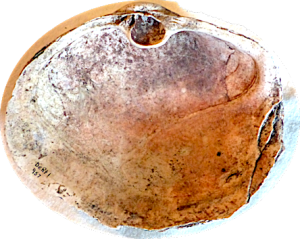
    Archaeological excavation from 1984-86 uncovers >5,000-year-old Coast Salish artifacts at today’s Pender Canal Site, but recent evidence nearby pushes that date back to 10,000 years ago.

    Ancient Clam Shell
  13. 13000 B.C.

    Under Glacial Ice

    The region is under as much as 1,600 metres of glacial ice.