“So many memories brought to mind.”

— Margo, South Surrey

Pender Islands Historical Timeline

Step back through the centuries and explore the rich history of Pender Island, from its earliest prehistoric roots to the vibrant community we know today. This interactive timeline lets you journey across key moments, uncover stories of the people and places that shaped the islands, and connect with the heritage that continues to inspire us. Use the filters to browse by year, explore distinct periods, or search by keyword to dive deeper into the events that matter most to you.
Select a period

Select a year

Enter Keyword

Use these filters to narrow down your entry results.

Showing: 301 - 325 of 338 entries
  1. 1882

    Auchterlonie Family Arrives

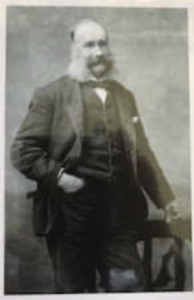
    Lawrence (1839-1917) and Helen (née Hope) Auchterlonie (1837-1888) arrive from Scotland. With Helen’s brother Rutherford the siblings divide the property they inherited from David Hope.

    Lawrence Wallace Auchterlonie later in life
  2. 1880

    Land Survey

    The province surveys North and South Pender into “quarter sections“ of 160 acres each.

  3. 1879

    Hope Family Inherits

    David Hope dies in a hunting accident. His brother Rutherford Hope and sister Helen Auchterlonie (née Hope; 1837-1888) inherit his land on North Pender.

  4. 1879

    South Pender Shepherd

    South Pender landowner James Alexander hires shepherd John Wessell to tend the sheep and builds him a cabin on Bedwell Harbour. Wessell and his family thus become the first non-Indigenous residents of South Pender, later moving to Saturna Island.

  5. 1877

    Hay Point Reserve

    The Joint Indian Reserve Commission confirms the formation of a 10-acre reserve on South Pender to “include Indian Houses, potatoe patches, but not to interfere with Mr Tod’s wharf“. The reserve at Hay Point is assigned to the Tsawout and Tseycum First Nations.

  6. 1877

    Grimmer Immigrates

    The Grimmer family, originally from England, immigrates to Canada from Australia. Son Washington Grimmer is a skilled sheep-shearer.

  7. 1876

    Rutherford Hope Arrives

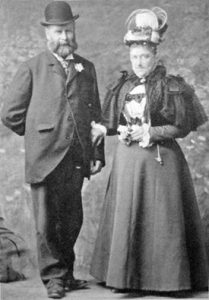
    Rutherford Hope (1843-1913) emigrates to Canada and joins his older brother David (1831-1879) on North Pender.

    Rutherford & Jeannie Hope 1899
  8. 1874

    Pender Survey

    Royal Engineer George Turner surveys North Pender, noting “there are two men living on this island besides some Indians who are looking after about 1500 sheep”. 

  9. 1872

    Hope & Buckley Arrive

    David Hope (1835-1882) and Noah Buckley come to North Pender and each takes up large land holdings.

  10. 1872

    US-Canada Border Drawn

    On October 21, an arbitration committee sets the boundary between the US and Canada through Haro Strait, placing the San Juan Islands in US territory and dividing the traditional territories of the Coast Salish Peoples. Pender, later South Pender, becomes the southernmost of the Canadian Gulf Islands.

  11. 1871

    BC Becomes a Province

    The Colony of British Columbia becomes the sixth province of Canada.

  12. 1871

    John Tod on South Pender

    John Tod, retired Chief Factor of the Hudson’s Bay Company, becomes the first white landowner on what will later become South Pender. He pre-empts a large tract of land to run sheep in the same year BC joins Confederation.

  13. 1868

    Pender Island Renamed

    Captain George Richards renames Pender Island, Port Browning, and Bedwell Harbour from their former Spanish names.

  14. 1868

    Victoria Named Capital

    Victoria is declared the capital of British Columbia.

  15. 1867

    Dominion of Canada

    The Dominion of Canada is created on July 1, 1867, but does not include British Columbia.

  16. 1863

    “The War of 1863”

    The murder of American, William Brady, and injury of his companion, John Henley, by five Quamichan at Shark Cove sandspit leads to military operations known as “the war of 1863.“ As a result, Aboriginal land continue to be alienated and Native jurisdiction eroded throughout British Columbia.

  17. 1860

    South Pender Land Grant

    Much of South Pender is granted to John Tod, an HBC fur trader and member of Vancouver Island’s first Legislative Council.

  18. 1858

    Fraser River Gold Rush

    Gold is discovered in the Cariboo region and the Fraser River gold rush begins, prompting the British to assert control and prevent American takeover.

  19. 1857

    Strait of Georgia Survey

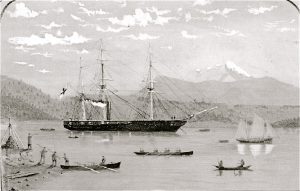
    Captain George Henry Richards R.N. begins a survey of the Strait of Georgia in the H.M.S. Plumper during the early stages of the international boundary dispute between Britain and the US.

    Landing Party surveying BC west coast.
  20. 1856

    First House of Assembly

    The first 7-member House of Assembly is elected for the Colony of Vancouver Island. Among them is Métis fur trader, businessman, politician and explorer Joseph McKay, whose daughter and son-in-law will later settle South Pender.

  21. 1850

    First Land Treaties

    First of 14 Aboriginal Land Treaties (the Douglas Treaties) are signed. Indigenous Peoples view them as land-sharing and peace agreements, not as a sale or surrender of land. The Tsawout, Tsartlip, Pauquachin, and Tseycum First Nations retain land and harvesting rights to Pender. Soon after, land at Hay Point on South Pender is designated as a Reserve.

  22. 1849

    Colony of Vancouver Island

    Pender Island becomes part of the Crown Colony of Vancouver Island (with Victoria as the capital), after which it unites with the Colony of British Columbia in 1866.

  23. 1846

    Oregon Treaty

    The Oregon Treaty divides British and American sovereignty along the 49th parallel from the Rockies to the West Coast. The boundary through the middle of the Salish Sea leaves the San Juan Islands unresolved. Some 40 Americans occupy the Oregon Territory north of the Columbia River, with a few hundred British north of there. The estimated 100,000-200,000 Indigenous Peoples living in the area are not included in the negotiations.

  24. 1843

    Fort Victoria Established

    Fort Victoria is established to protect British interests from the Americans.

  25. 1836

    S.S. Beaver Arrives

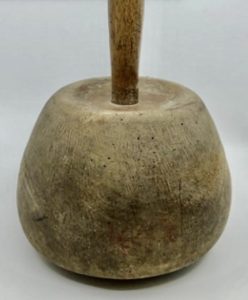
    Owned by the Hudson’s Bay Company, the S.S. Beaver is the first steamship to operate off the BC coast. The Royal Navy charters it to survey the coastline. In 1888 the Beaver runs aground in Burrard Inlet. Pender stonecutter Alex Brackett salvages oak and teak from the wreck for mauls, now in the Pender museum.

    Stone Cutter's Mallet